
tfcc exercises pdf
Understanding TFCC Injuries and Rehabilitation
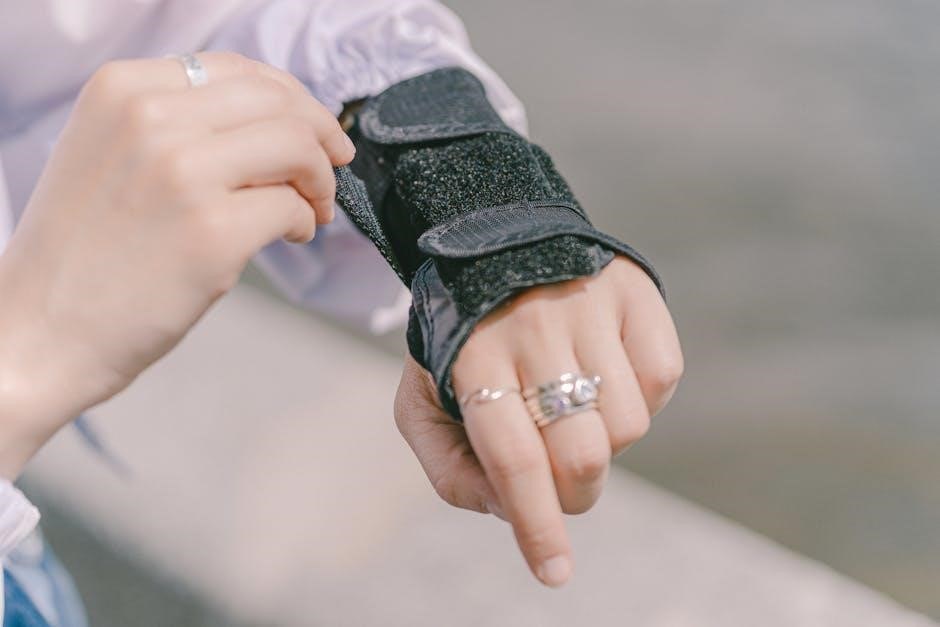
Rehabilitation following TFCC repair emphasizes immobilization, kinetically-linked muscle activation, and progressive wrist loading, with protocols varying amongst hand therapists currently.
What is the Triangular Fibrocartilage Complex (TFCC)?

The Triangular Fibrocartilage Complex (TFCC) is a crucial component of the wrist joint, acting as a cushion and stabilizer between the ulna and the carpal bones. This complex structure isn’t a single entity, but rather a combination of cartilage, ligaments, and tendons working synergistically to enable smooth wrist motion and bear significant loads. It’s vital for both ulnar and radial deviation, as well as rotational movements.
Damage to the TFCC can significantly impair wrist function, leading to pain, clicking, and instability. Understanding its anatomy and biomechanical role is fundamental to effective rehabilitation. Current rehabilitation approaches, particularly post-foveal repair surgery, prioritize protecting the repaired ligament while restoring joint stability and function. While a definitive, universally accepted protocol is still evolving, the importance of the TFCC in overall wrist health is undeniable.
Causes of TFCC Tears
TFCC tears commonly arise from traumatic events, such as falls onto an outstretched hand, particularly with ulnar deviation and rotation. Repetitive twisting motions, common in certain sports or occupations, can also contribute to gradual wear and tear, leading to degenerative tears. Direct impact or crush injuries to the wrist are less frequent causes, but can result in significant damage.

The specific mechanism of injury often dictates the tear pattern. Injuries requiring foveal repair surgery indicate a need to restore joint stability. Regardless of the cause, early diagnosis and appropriate management are crucial. Rehabilitation programs, even non-operative ones, emphasize adherence to immobilization and early activation of kinetically-linked muscles to support healing and prevent further complications. Understanding the injury’s origin guides tailored treatment plans.
Symptoms of a TFCC Injury
Symptoms of a TFCC injury vary depending on the tear’s severity and location. Common presentations include ulnar-sided wrist pain, often exacerbated by rotational movements or gripping. Patients may experience clicking, popping, or a sense of instability in the wrist. Weakness in grip strength is frequently reported, impacting daily activities.
Swelling around the ulnar side of the wrist is also typical. Some individuals describe a dull ache that radiates into the forearm. It’s important to note that symptoms can mimic other wrist conditions, necessitating a thorough clinical evaluation. Rehabilitation, whether pre- or post-operative, focuses on restoring function, but gradually building strength is key. Early exercises, as suggested by Kaiser Permanente, should be initiated slowly and stopped if pain arises.

Non-Operative Treatment for TFCC Tears
Non-operative management prioritizes immobilization, early kinetically-linked muscle rehabilitation, and a progressive loading program for the wrists, ensuring optimal healing outcomes.
Immobilization and Early Management
Initial management of a TFCC tear, whether considering operative or non-operative pathways, frequently involves a period of immobilization. This typically consists of a splint or cast, designed to protect the injured complex and minimize further irritation. The duration of immobilization varies based on the tear’s severity and individual patient factors, but generally ranges from several weeks to a month.
During this phase, the focus isn’t on active movement, but rather on pain control and reducing inflammation. Gentle range of motion exercises, performed within the confines of the splint, may be introduced to prevent stiffness. It’s crucial to adhere strictly to the prescribed immobilization period, as premature movement can compromise healing. Following the immobilization phase, a carefully structured rehabilitation program, emphasizing kinetically-linked muscle activation and progressive loading, is initiated to restore wrist function.
Early Rehabilitation: Kinetically-Linked Muscle Activation
Following the immobilization period, early rehabilitation centers around activating muscles that dynamically support the wrist joint – those “kinetically-linked” muscles. This approach recognizes that the wrist doesn’t function in isolation; its stability and movement are heavily influenced by the forearm, hand, and even shoulder.
Exercises at this stage are gentle and focus on restoring neuromuscular control without placing excessive stress on the healing TFCC. These may include isometric exercises (muscle contractions without movement), scapular stabilization drills, and light forearm rotations. The goal is to re-establish proper muscle firing patterns and prepare the wrist for more demanding exercises. Adherence to a structured program, as highlighted in recent studies, is paramount for optimal outcomes, ensuring a gradual and controlled return to function.
Progressive Loading of the Wrist
As pain subsides and initial muscle activation improves, the focus shifts to progressively loading the wrist joint. This involves gradually increasing the forces acting upon the TFCC, preparing it for functional activities. This phase builds upon the foundation established during early rehabilitation, carefully advancing exercises to challenge the healing tissues.
Loading might begin with gentle range-of-motion exercises, progressing to light resistance using therabands or dumbbells. Strengthening exercises targeting wrist flexion, extension, ulnar and radial deviation are introduced, always monitoring for pain or signs of re-injury. The key is a controlled and individualized approach, guided by a therapist, ensuring the TFCC can tolerate increasing demands without compromise. Proper progression is vital for restoring full wrist function and preventing setbacks.

TFCC Repair Surgery & Post-Operative Rehab
Post-surgical protocols prioritize ligament protection via immobilization, followed by phased rehabilitation focusing on range of motion and gradual strengthening of wrist muscles.
Post-Surgery: Initial Immobilization & Protection
Following TFCC repair surgery, a crucial initial phase centers around protecting the repaired ligament to facilitate optimal healing. Immediately post-operation, the forearm and hand are typically immobilized within a substantial bandage and plaster splint – do not remove this splint. This immobilization period is paramount, restricting wrist movement to prevent stress on the healing tissues.
The duration of initial immobilization can vary based on the specific repair technique and surgeon’s preference, but generally extends for several weeks. During this time, gentle range-of-motion exercises for fingers and the elbow (within the splint’s limitations) may be initiated to prevent stiffness in adjacent joints. Strict adherence to immobilization guidelines is vital to avoid compromising the surgical repair and ensuring a successful long-term outcome.
Phase 1: Early Post-Op (Weeks 0-6)
The initial six weeks post-TFCC repair focus on protecting the repair while initiating gentle mobilization. Continued immobilization remains key, though subtle movements are introduced. Range of motion exercises, carefully guided by a therapist, begin to restore finger and elbow flexibility, avoiding stress on the wrist joint itself.
Gentle strengthening exercises, commencing around week two, target the muscles surrounding the wrist and hand, but with minimal load. These exercises aim to prevent muscle atrophy without jeopardizing the healing TFCC. Emphasis is placed on pain-free movement and avoiding any activities that cause discomfort. Progress is gradual, and adherence to the therapist’s instructions is crucial during this foundational phase of rehabilitation.
Range of Motion Exercises (Weeks 0-6)
During the initial post-operative phase, range of motion (ROM) exercises are carefully implemented to maintain flexibility in adjacent joints without compromising the TFCC repair. Finger flexion and extension are encouraged early on to prevent stiffness. Gentle elbow ROM exercises are also initiated.
Wrist movements, however, are strictly controlled. Passive range of motion, performed by the therapist, may be introduced cautiously, avoiding ulnar deviation and rotation. Active assisted range of motion, where the patient uses their own muscles with guidance, may follow as tolerated. The goal is to prevent joint stiffness while protecting the healing tissues. Exercises should be stopped immediately if pain arises, and progression is dictated by individual healing and therapist assessment.
Gentle Strengthening Exercises (Weeks 2-6)
As initial healing progresses, gentle strengthening exercises are introduced to begin restoring muscle strength around the wrist and hand. Isometric exercises, where muscles are contracted without joint movement, are a cornerstone of this phase. These include wrist flexion, extension, ulnar and radial deviation isometrics.
Grip strengthening can begin with light squeezing of a soft ball or putty, avoiding forceful gripping. Finger abduction and adduction exercises are also incorporated. The emphasis remains on low-load, high-repetition exercises to avoid stressing the repaired TFCC. Pain is a critical guide; exercises should be pain-free or cause only minimal discomfort. Gradual progression is key, guided by the therapist’s evaluation of tissue healing and patient tolerance.
Phase 2: Intermediate Rehabilitation (Weeks 6-12)
During this phase, the focus shifts towards building greater strength and restoring more functional wrist and hand movements. Strengthening exercises progress to include light resistance using elastic bands or small weights, continuing with wrist flexion, extension, ulnar/radial deviation, and grip strengthening.
Proprioceptive exercises are introduced to improve wrist position sense and coordination, crucial for regaining control. These may involve balance board activities or targeted exercises to challenge the wrist’s ability to sense its position in space. The goal is to gradually increase the load on the wrist while maintaining pain-free movement, preparing for more demanding activities. Continued monitoring by a therapist is essential to ensure appropriate progression.
Strengthening Exercises – Wrist & Hand (Weeks 6-12)
This phase involves a gradual increase in resistance to rebuild wrist and hand strength. Exercises begin with light resistance bands for wrist flexion, extension, ulnar and radial deviation, performed in multiple repetitions. Grip strengthening is initiated with soft balls or putty, progressing to small weights as tolerated.
Focus is placed on controlled movements, avoiding any pain provocation. Exercises should be performed slowly and deliberately, emphasizing proper form. Therapists will demonstrate correct techniques and monitor progress, adjusting the program based on individual needs. The aim is to progressively challenge the muscles surrounding the wrist and hand, improving their capacity to support and stabilize the joint, preparing for functional tasks.
Proprioceptive Exercises (Weeks 8-12)
Proprioception, or the sense of joint position, is crucial for wrist stability and function. Exercises during this phase aim to restore this awareness, enhancing neuromuscular control. Activities include weight-shifting exercises with the hand supported, and reaching tasks with the eyes closed, challenging the wrist’s ability to sense its position in space.
Balance boards or unstable surfaces can be incorporated to further challenge proprioceptive abilities. These exercises are performed slowly and with control, focusing on maintaining a stable wrist position. The goal is to improve the wrist’s ability to react to unexpected forces and prevent re-injury, ultimately facilitating a smooth return to daily activities and sport.
Phase 3: Advanced Rehabilitation (Weeks 12+)
Advanced rehabilitation focuses on restoring full function and preparing for a return to desired activities. Functional exercises mimic real-life movements, such as lifting, carrying, and twisting, gradually increasing the load and complexity. This phase incorporates sport-specific or work-related tasks to ensure a successful transition back to prior levels of activity.
Advanced strengthening emphasizes endurance and power, utilizing resistance bands, weights, and plyometric exercises. The aim is to build the strength and stamina needed to withstand the demands of daily life or athletic pursuits. Continued monitoring for pain or swelling is essential, adjusting the program as needed to prevent setbacks and optimize recovery.
Functional Exercises & Return to Activity (Weeks 12+)
Functional exercises are now prioritized, simulating daily tasks and sport-specific movements. This includes activities like lifting groceries, opening doors, and repetitive wrist motions relevant to work or hobbies. The goal is to integrate the wrist back into practical use, ensuring proper mechanics and minimizing compensatory patterns. Gradual exposure to these activities is key, monitoring for any pain or swelling.
Return to activity is a staged process, guided by pain levels and functional milestones. Initially, light activities are introduced, progressively increasing intensity and duration. Driving may be considered around week six, contingent on confidence and control; A successful return requires consistent adherence to the exercise program and open communication with the therapist, adapting the plan as needed to achieve optimal outcomes.
Advanced Strengthening & Endurance (Weeks 12+)
Advanced strengthening focuses on maximizing wrist and hand power, incorporating resistance bands, weights, and specialized grip tools. Exercises target all muscle groups surrounding the wrist, including flexors, extensors, ulnar and radial deviators, and intrinsic hand muscles. The aim is to restore full strength and stability, preparing the wrist for demanding activities.
Endurance training is equally crucial, building the wrist’s capacity to sustain activity over prolonged periods. This involves high-repetition exercises and functional tasks that mimic real-life demands. Maintaining a consistent exercise routine is vital to prevent re-injury and optimize long-term function. Continued monitoring for pain or swelling is essential, adjusting the program as needed to ensure safe and effective progression.
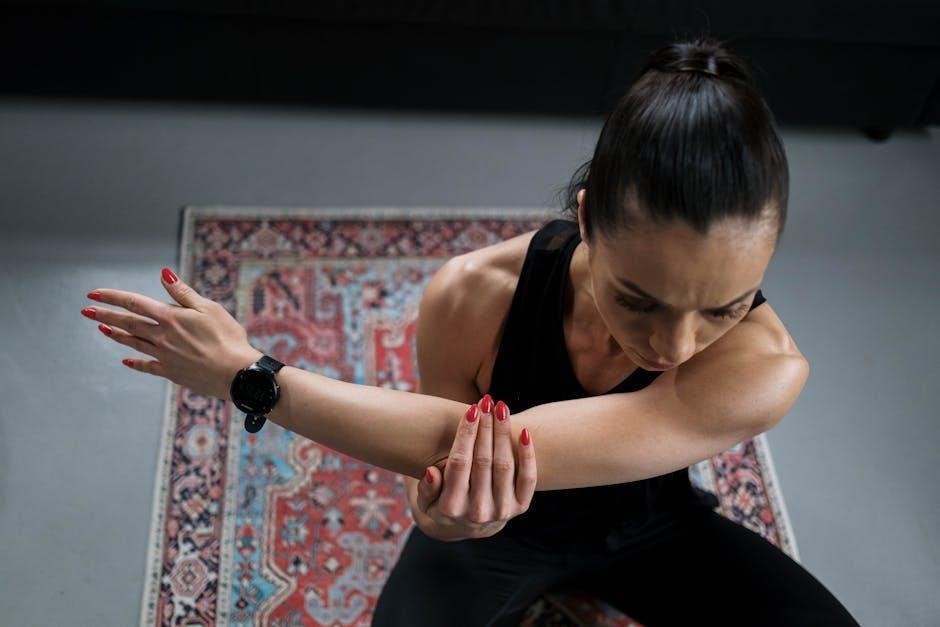
Specific Exercises for TFCC Rehabilitation (PDF Resources)
Kaiser Permanente provides examples of exercises, emphasizing slow starts and pain monitoring, while Sussex Hand Surgery focuses on gradually building wrist and hand strength.
Wrist Flexion and Extension Exercises
Wrist flexion and extension exercises are foundational components of TFCC rehabilitation programs, aiming to restore a full and pain-free range of motion. These exercises should be initiated gently, adhering to the guidance provided by a qualified hand therapist, and always respecting individual pain thresholds. Begin by slowly bending your wrist forward (flexion) and then backward (extension), focusing on controlled movements rather than achieving a large range immediately.
Kaiser Permanente highlights the importance of starting slowly and easing off if pain arises, a crucial principle for these exercises. Perform these movements within a comfortable arc, avoiding any forceful pushing or straining. As strength and flexibility improve, resistance can be gradually added using light weights or resistance bands. Consistent, controlled repetitions are key to rebuilding wrist function and supporting the healing TFCC. Remember to prioritize proper form over the number of repetitions.
Ulnar and Radial Deviation Exercises

Ulnar and radial deviation exercises are vital for restoring side-to-side wrist movement, often compromised following a TFCC injury. These exercises focus on gently moving the wrist from side to side – ulnar deviation (pinky finger side) and radial deviation (thumb side); Initiate these movements slowly and deliberately, paying close attention to any discomfort. As with all TFCC rehabilitation exercises, adherence to a hand therapist’s guidance is paramount.
Kaiser Permanente emphasizes starting slowly and stopping if pain occurs, a critical consideration for these movements. Begin with a small range of motion, gradually increasing it as tolerated. Resistance can be added later using light dumbbells or resistance bands, but only when pain-free movement is established. Consistent performance of these exercises helps rebuild the supporting muscles around the wrist, contributing to overall stability and function; Prioritize controlled movements and proper form throughout the exercise progression.
Grip Strengthening Exercises
Grip strengthening exercises are crucial for regaining hand function after a TFCC injury, as a weakened grip can significantly impact daily activities. These exercises should be introduced gradually, typically during the intermediate phase of rehabilitation (weeks 6-12), as advised by a qualified hand therapist. Begin with low-resistance activities, such as gentle squeezing of a soft ball or putty.
Sussex Hand Surgery protocols highlight the importance of gradually building strength in the wrist and hand. Progress to using hand grippers or resistance bands, increasing the resistance as your strength improves. Remember to prioritize proper form and avoid overexertion. Pain is a signal to reduce the intensity or modify the exercise. Consistent and controlled strengthening exercises will help restore grip strength, improve hand dexterity, and facilitate a return to functional activities. Always follow your therapist’s specific recommendations.

Returning to Daily Activities & Driving
Returning to driving is possible around week six, contingent upon confidence and control, while work resumption depends on job demands and healing progress.
Guidelines for Returning to Work
Returning to work after a TFCC injury, and potentially surgery, requires a phased approach guided by your therapist and physician. The timeline heavily depends on the nature of your job. Light-duty work, avoiding heavy lifting or repetitive wrist motions, may be possible relatively early – potentially within a few weeks – following the initial post-operative or rehabilitation phase.
However, jobs demanding significant wrist strength, prolonged gripping, or repetitive movements will necessitate a more gradual return. A comprehensive assessment of your functional capacity is crucial before resuming full duties. Consider modified tasks, ergonomic adjustments, and scheduled breaks to minimize stress on the healing TFCC. Communication with your employer regarding limitations and necessary accommodations is vital to ensure a safe and successful return to the workplace. Prioritize pain management and adhere to all prescribed exercise protocols to optimize recovery and prevent re-injury.
When Can I Return to Driving?
Determining your readiness to return to driving post-TFCC injury or surgery is paramount for safety. Generally, a return to driving is considered around week six, if you’ve regained sufficient control and confidence in your wrist and hand. However, this is a guideline, not a strict rule, and individual progress varies significantly.
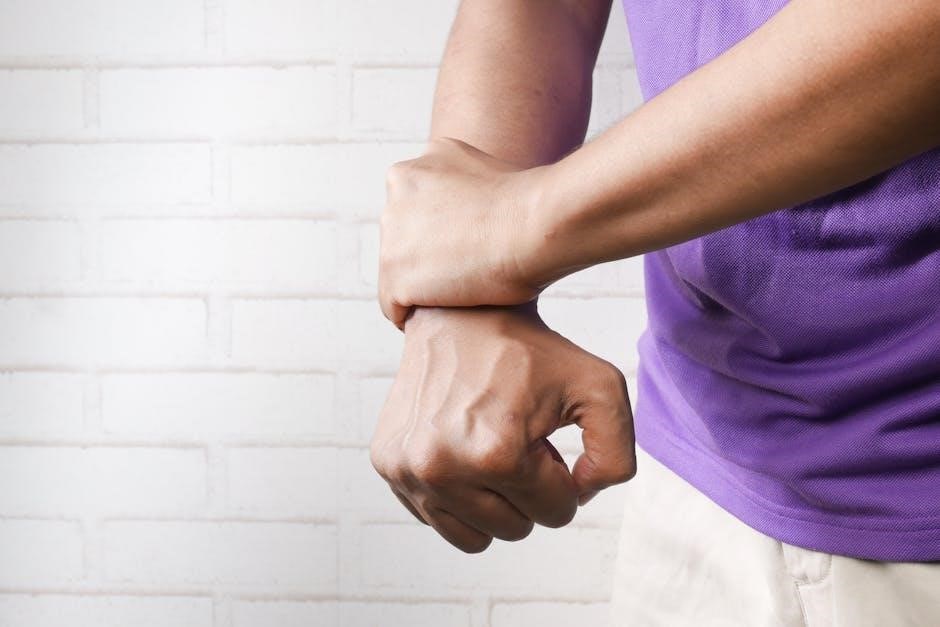
Crucially, you must be able to perform emergency maneuvers – rapid steering, braking – without pain or compromising control of the vehicle. Your therapist will assess your range of motion, strength, and reaction time. If you were immobilized in a splint, ensure it’s removed and doesn’t hinder your ability to operate the vehicle safely. Always prioritize caution and consult with your physician before resuming driving to avoid potential risks.
Leave a Reply
You must be logged in to post a comment.