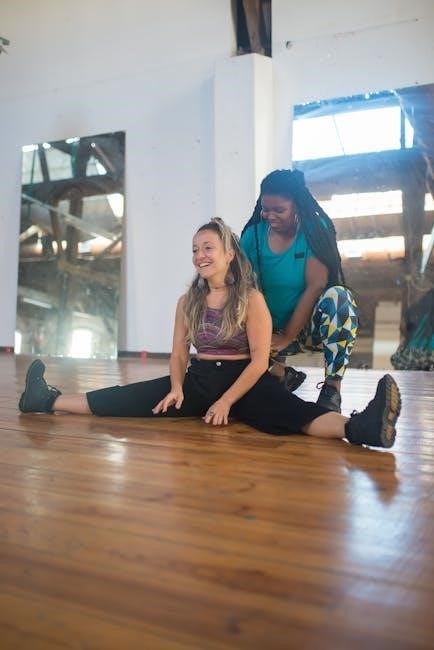
yoga for beginners pdf
Yoga for Beginners: A Comprehensive PDF Guide
Discover a wealth of resources! Explore beginner-friendly PDF guides offering 3-week practice plans, 84 illustrated poses, and routines for fat loss and core strength.
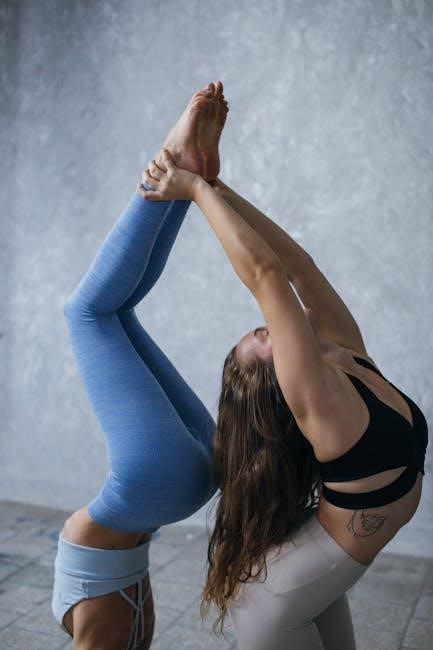
Access detailed instructions for Sun Salutations, Warrior poses, and more, complete with Sanskrit names and modifications, all conveniently available in downloadable PDF format.
What is Yoga and its Benefits?
Yoga, originating in ancient India, is a holistic practice uniting mind, body, and spirit through physical postures (asanas), breathing techniques (pranayama), and meditation (dhyana). Beginner PDF guides often emphasize these core components, providing a foundational understanding.
The benefits are numerous and well-documented. Yoga enhances flexibility, strength, and balance, while reducing stress and promoting mental clarity. PDFs frequently highlight these advantages, making yoga accessible to all fitness levels.
For beginners, yoga offers a gentle introduction to physical activity, improving posture and body awareness. Many downloadable resources detail how consistent practice can alleviate chronic pain, boost immunity, and improve sleep quality. Exploring these PDFs unlocks a path to overall well-being, offering structured routines and pose breakdowns.
Understanding the Different Styles of Yoga
Yoga encompasses diverse styles, each with unique characteristics. Beginner PDF guides often introduce Hatha, a foundational practice emphasizing basic poses and breathwork, ideal for newcomers. Vinyasa, known for its flowing sequences synchronized with breath, is also frequently covered.
Other styles include restorative yoga, focusing on deep relaxation with supported poses, and Yin yoga, targeting connective tissues through long-held postures. PDFs may detail the intensity levels and physical demands of each style, helping beginners choose appropriately.
Understanding these variations is crucial for a safe and enjoyable practice. Resources often explain how different styles cater to varying fitness levels and goals, empowering beginners to select a path aligned with their needs and preferences. Exploring these PDFs provides a comprehensive overview of the yoga landscape.
Preparing for Your First Yoga Session
Beginner yoga PDF guides emphasize preparation for a positive experience. This includes creating a dedicated space, free from distractions, and informing yourself about basic etiquette. Many resources suggest practicing on an empty stomach or with a light snack a few hours prior.
Essential considerations involve appropriate attire – comfortable, non-restrictive clothing is key. PDFs often detail necessary equipment like a yoga mat, blocks, and a strap, explaining their uses for modifications and support.
Hydration is also crucial; drink water before and after your session. Mental preparation, such as setting intentions, can enhance your practice. These PDFs aim to equip beginners with the knowledge to approach their first session confidently and safely.
Essential Equipment (Mat, Blocks, Strap)
Yoga PDF guides consistently highlight three essential items for beginners: a mat, blocks, and a strap. The mat provides a non-slip surface for stability and cushioning during poses. Blocks are invaluable tools for modifications, bringing the floor closer to you and aiding alignment, particularly in poses like Triangle.
Straps extend your reach, assisting in poses where flexibility is limited, such as forward folds. Beginner PDFs often demonstrate how to use these props effectively to deepen poses safely.
While not mandatory, these tools significantly enhance accessibility and support proper form, preventing injuries and fostering a more comfortable practice. Investing in quality equipment is recommended for long-term enjoyment.
What to Wear and Eat Before Yoga
Beginner yoga PDF guides emphasize comfortable, breathable clothing allowing a full range of motion. Avoid restrictive garments hindering movement or causing discomfort during poses. Moisture-wicking fabrics are ideal, preventing overheating. Regarding food, it’s best to practice on a relatively empty stomach.
Consume a light snack, like a banana or small handful of nuts, 1-2 hours before your session. Avoid heavy meals, as they can cause sluggishness and discomfort. Hydration is crucial; drink water before, during, and after practice.
Listening to your body is key; adjust your intake based on your individual needs and the intensity of the practice.
Basic Yoga Poses for Beginners
Many beginner yoga PDF resources prioritize foundational poses. Sun Salutations (Surya Namaskar) are frequently included, offering a dynamic warm-up sequence. Warrior poses (Virabhadrasana I, II, and III) build strength and stability, with modifications suggested for varying levels.

Triangle Pose (Trikonasana) improves flexibility and balance, while Child’s Pose (Balasana) provides a restorative resting position. These poses are often presented with detailed instructions and visual aids within the PDFs.
PDF guides often feature 58-pose flows and 84 illustrated poses, breaking down alignment and benefits for beginners to safely explore these fundamental asanas.
Sun Salutations (Surya Namaskar) – Step-by-Step Guide
Beginner yoga PDFs consistently feature Sun Salutations as a core practice. Typically, guides break down the sequence into distinct steps: Mountain Pose (Tadasana), Forward Fold (Uttanasana), Halfway Lift (Ardha Uttanasana), Plank Pose, Chaturanga, Upward-Facing Dog (Urdhva Mukha Svanasana), and Downward-Facing Dog (Adho Mukha Svanasana).
Illustrated PDFs provide visual cues for proper alignment in each pose. Modifications are often included, such as dropping the knees during Chaturanga or using a block for support in Forward Fold.
These guides emphasize breath synchronization – inhaling during expansion and exhaling during contraction – to deepen the practice and build heat within the body.
Warrior Poses (Virabhadrasana I, II, III) – Instructions & Modifications
Yoga for beginners PDFs dedicate significant attention to Warrior poses (Virabhadrasana I, II, and III) due to their foundational nature. Instructions detail proper alignment: a 90-degree angle in the front knee for Warrior II, torso facing forward, and arms extended. Warrior I emphasizes hip alignment and a gentle backbend.
PDF guides often include modifications for accessibility. Beginners can shorten their stance, slightly bend the back knee in Warrior II, or use a wall for balance in Warrior III.
Detailed descriptions highlight the benefits – strength, stability, and increased stamina – and emphasize maintaining a long spine throughout each pose.
Triangle Pose (Trikonasana) – Alignment and Benefits
Beginner yoga PDFs consistently feature Triangle Pose (Trikonasana) as a key posture for building strength and flexibility. Alignment cues emphasize a straight spine, reaching towards the ceiling with both arms, and hinging at the hip, not the waist.
Illustrated guides demonstrate reaching the lower hand towards the shin, ankle, or floor – modifications are crucial for beginners. Maintaining a slight bend in the knee is often recommended to prevent overextension.
PDF resources detail the benefits: stretching the spine, hamstrings, and groins, while strengthening the legs and core. They also highlight the pose’s ability to relieve stress and improve digestion.
Child’s Pose (Balasana) – Relaxation and Restorative Benefits
Yoga for beginners PDFs universally include Child’s Pose (Balasana) as a foundational restorative posture. These guides illustrate variations – knees together or apart – catering to individual comfort levels.
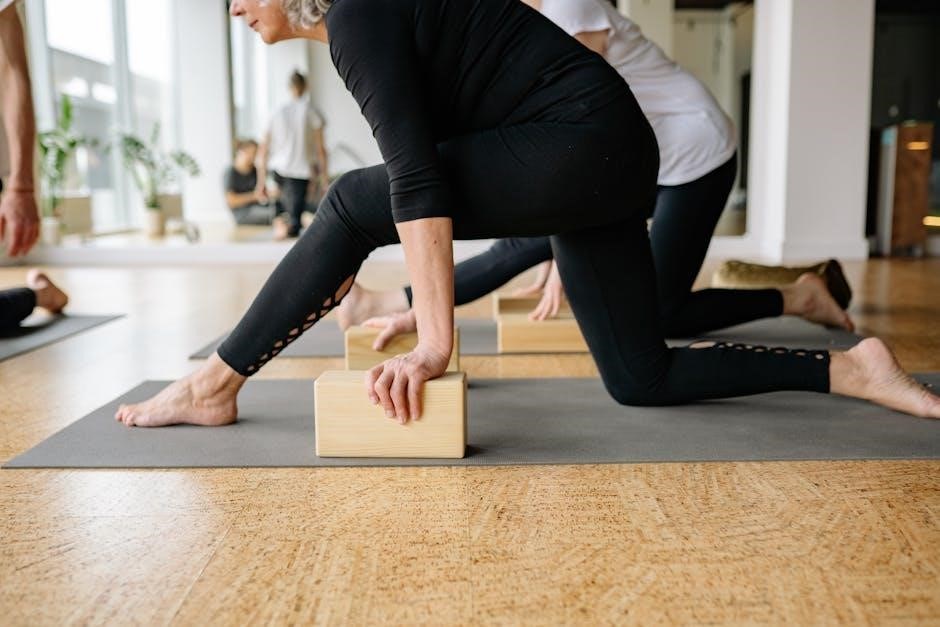
Detailed instructions emphasize gently lowering the torso between the thighs, extending arms forward or resting them alongside the body. Breathing deeply is consistently highlighted for maximizing relaxation.
PDF resources detail the numerous benefits: gently stretching the hips, thighs, and ankles, while calming the brain and relieving stress and fatigue. It’s often presented as a counter-pose to more strenuous asanas.
Many guides suggest using props like blankets or bolsters for added support and deeper relaxation in this essential pose.
3-Week Beginner Yoga Practice Plan (PDF Focus)
Numerous yoga for beginners PDFs feature structured 3-week plans, progressively building strength and flexibility. These plans typically begin with foundational poses and gentle flows, increasing intensity weekly.
PDF guides often break down each week into daily or several-times-a-week routines, specifying pose durations and repetitions. Sun Salutations and basic standing poses are common starting points.
Emphasis is placed on proper alignment and modifications, with illustrations demonstrating correct form and alternative options for varying abilities. Breathing exercises (pranayama) are frequently integrated.
These plans often include a focus on hip-opening poses and gentle twists, promoting flexibility and releasing tension. The goal is to establish a consistent practice and build confidence.
20-Minute Beginner Yoga Routine
Many beginner yoga PDFs offer concise 20-minute routines, perfect for fitting yoga into a busy schedule. These routines prioritize accessibility and foundational poses, making them ideal for newcomers.
Typically, a 20-minute sequence begins with gentle warm-up poses like Cat-Cow and Child’s Pose, preparing the body for deeper stretches. Sun Salutations are often included, modified for beginners.
Core poses like Downward-Facing Dog, Warrior I, and Triangle Pose are held for several breaths, emphasizing proper alignment. Modifications are frequently provided to accommodate different levels.

The routine concludes with a brief cool-down and Savasana (corpse pose) for relaxation and integration. These routines aim to build strength, flexibility, and mindfulness in a short timeframe.
30-Minute Fat Loss Yoga Workout
Several beginner yoga PDFs feature 30-minute workouts specifically designed to promote fat loss. These routines combine dynamic movement with sustained poses to elevate the heart rate and boost metabolism.
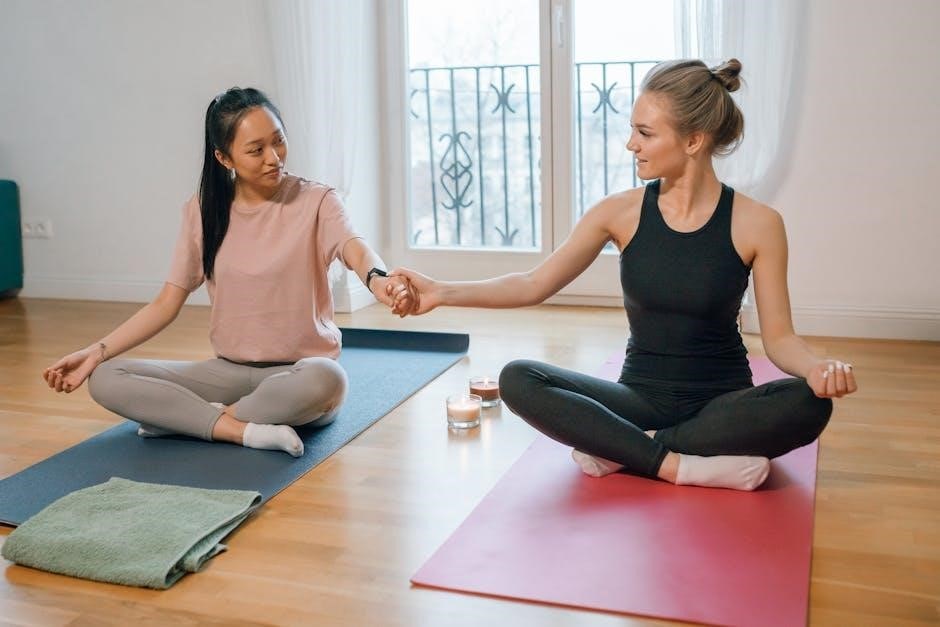
A typical 30-minute fat loss flow incorporates Sun Salutations as a central component, performed at a brisk pace to generate heat. Standing poses like Warrior II and Triangle Pose are held for shorter durations, repeated multiple times.
Core strengthening poses, such as Plank and Boat Pose, are included to engage abdominal muscles and improve stability. Backbends like Cobra and Bridge Pose open the chest and increase energy expenditure.
These workouts often emphasize breathwork (pranayama) to enhance calorie burn and improve focus. Cool-down stretches and Savasana conclude the session, promoting recovery and relaxation.
Yoga for Core Strength – Poses and Sequence
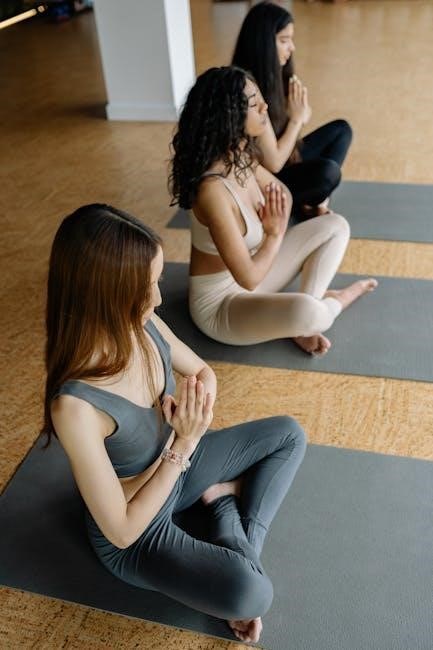
Many beginner yoga PDFs dedicate sections to building core strength, recognizing its importance for overall stability and posture. These sequences typically begin with gentle warm-ups, preparing the abdominal muscles for more challenging poses.
Commonly included poses are Plank variations (forearm plank, side plank), Boat Pose (Navasana), and variations of Chair Pose. These are often held for 5-10 breaths, repeated on both sides to ensure balanced development.
Twisting poses, like Revolved Triangle or Seated Spinal Twist, also engage the core muscles. Backbends, such as Locust Pose, further strengthen the back and abdominal area.
PDF guides often provide modifications for beginners, offering easier variations of poses to build strength gradually. Emphasis is placed on maintaining proper alignment and engaging the core throughout each movement.
58-Pose Yoga Flow Sequence for Beginners
Several comprehensive yoga PDFs feature extensive 58-pose flow sequences designed for beginners, aiming to build strength, flexibility, and body awareness. These sequences typically start with gentle warm-up poses like Easy Pose (Sukhasana) and Cat-Cow Pose (Marjaryasana-Bitilasana).
The flow progresses through sun salutations, standing poses (Warrior I, II, Triangle), and seated poses, incorporating backbends like Bridge Pose (Setu Bandhasana) and gentle twists.
These PDFs often break down each pose with clear instructions and illustrations, emphasizing proper alignment and breathing techniques. Modifications are frequently offered to accommodate varying levels of flexibility and strength.
The sequence culminates in restorative poses like Child’s Pose (Balasana) and Savasana (Corpse Pose) for relaxation and integration, providing a complete yoga experience within a single PDF.
84 Illustrated Beginner Yoga Poses – A Detailed Guide
Many beginner yoga PDFs boast an impressive collection of 84 illustrated poses, serving as a comprehensive visual reference for practitioners. These guides meticulously detail each asana with clear images demonstrating proper form and alignment.
Alongside the illustrations, you’ll find the Sanskrit name of each pose, alongside pronunciation guidance, enhancing your understanding of yoga’s traditional terminology. Detailed descriptions explain the benefits, step-by-step instructions, and common modifications.
These PDFs are structured to progress from foundational poses to more challenging variations, allowing beginners to build strength and flexibility gradually. They often categorize poses by type – standing, seated, twists, and backbends – for easy navigation.
This detailed approach empowers beginners to practice safely and effectively, fostering a deeper connection to their bodies and the practice of yoga.
Sanskrit Names and Pronunciation
Comprehensive yoga PDFs for beginners frequently include the Sanskrit names of each pose, enriching the learning experience and connecting practitioners to yoga’s roots. However, simply knowing the name isn’t enough; pronunciation guides are crucial.
Many resources offer phonetic transcriptions or audio pronunciations alongside the Sanskrit name, helping beginners accurately articulate terms like Trikonasana (Triangle Pose) or Virabhadrasana (Warrior Pose).
Understanding the correct pronunciation fosters respect for the tradition and aids in memorization. Some PDFs break down the syllables, explaining the sounds and intonation.
This attention to detail elevates the practice beyond mere physical exercise, inviting a deeper engagement with the philosophical and spiritual aspects of yoga.
Understanding Pose Modifications
Beginner yoga PDFs wisely emphasize the importance of pose modifications, acknowledging that flexibility and strength vary greatly. These guides often present variations for each asana, catering to different body types and limitations.
Modifications might involve using props like blocks or straps to achieve proper alignment, or simplifying the pose altogether. For example, Warrior II can be modified by shortening the stance or slightly bending the front knee.
Detailed PDFs illustrate these modifications with clear images and explain how they maintain the pose’s benefits while reducing strain.
Learning to modify poses prevents injury and allows beginners to safely progress at their own pace, fostering a sustainable and enjoyable yoga practice.
Common Yoga Poses with Photos and Descriptions
Comprehensive yoga PDFs for beginners dedicate significant space to illustrating and describing foundational poses. Expect detailed photographic guides showcasing proper alignment for poses like Mountain Pose (Tadasana), Downward-Facing Dog (Adho Mukha Svanasana), and Child’s Pose (Balasana).
Descriptions extend beyond just the physical steps, often including the benefits of each pose – for example, Downward-Facing Dog stretches the hamstrings and calves while strengthening the arms and shoulders.
These PDFs frequently feature over 50 common poses, catering to various levels, and provide clear instructions for entering and exiting each asana safely.
Visual aids and detailed explanations empower beginners to understand and practice these poses with confidence, building a solid foundation for their yoga journey.
Troubleshooting Common Beginner Mistakes
Many beginner yoga PDFs proactively address frequent errors. They often highlight issues like locking the knees in poses such as Triangle Pose (Trikonasana) or rounding the back in forward folds.

These guides provide corrective cues, suggesting modifications like bending the knees or engaging the core to maintain proper alignment and prevent injury.
Common pitfalls, such as improper weight distribution in Warrior poses or straining the neck in seated postures, are clearly identified and explained.
PDFs emphasize the importance of listening to your body and avoiding pushing beyond your limits, offering alternative variations for those with limited flexibility or strength.
Ultimately, these troubleshooting sections empower beginners to self-correct and refine their practice safely and effectively.
Finding Reliable Yoga PDF Resources Online
Numerous websites offer free yoga PDFs for beginners, but discerning quality is crucial. Look for resources from certified yoga instructors or reputable yoga studios.
Websites hosting extensive pose libraries, like those detailing 84 illustrated poses, are valuable. Prioritize PDFs with clear instructions, detailed images, and Sanskrit names.
Beware of sources lacking credentials or offering overly complex sequences for beginners. Check for user reviews or testimonials to gauge resource reliability.
Platforms offering 3-week practice plans or 20/30-minute routines are excellent starting points. Ensure the PDF is easily downloadable and viewable on various devices.
Always cross-reference information and consult a healthcare professional before starting any new exercise program.
Safety Precautions and Contraindications
Beginners should prioritize safety when using yoga PDFs. Always listen to your body and avoid pushing beyond your limits. Warm-up adequately before each session.
Individuals with pre-existing health conditions – such as heart problems, high blood pressure, or joint issues – should consult a doctor before starting yoga.
Pregnant women should modify poses or opt for prenatal yoga programs. Certain poses may be contraindicated during pregnancy.
Avoid holding your breath during poses; maintain steady, deep breathing throughout the practice. Stop immediately if you experience pain or discomfort.
Use props like blocks and straps to modify poses and ensure proper alignment. A qualified instructor’s guidance is always recommended.
Integrating Yoga into Your Daily Life
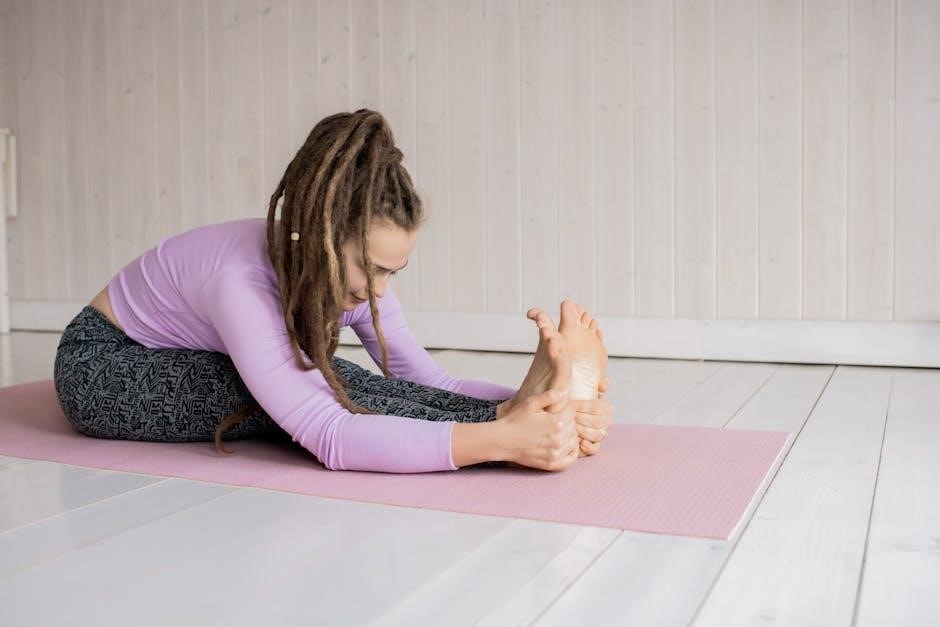
Beyond the PDF routines, weave yoga’s benefits into everyday living. Start with mindful breathing exercises during commutes or breaks, enhancing focus and reducing stress.
Incorporate gentle stretches throughout the day, especially if you have a sedentary job. Simple poses like seated twists can alleviate tension.
Establish a consistent practice, even if it’s just 15-20 minutes daily. Consistency is key to experiencing long-term benefits.
Utilize yoga principles – like mindfulness and non-judgment – in your interactions and decision-making.
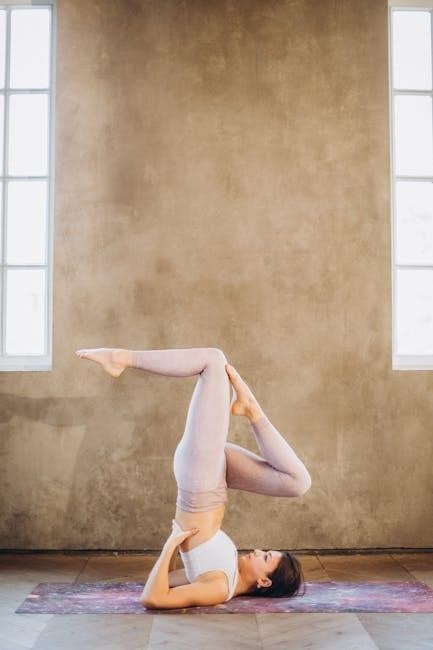
Explore short, guided meditations available online or through apps to complement your physical practice. Yoga is a holistic lifestyle, not just exercise!
Resources for Further Learning
Expand your knowledge beyond initial PDF guides! Numerous online platforms offer comprehensive yoga resources, including pose tutorials and instructional videos.
Explore websites dedicated to yoga anatomy to deepen your understanding of proper alignment and body mechanics. This enhances safety and effectiveness.
Consider joining online yoga communities or forums to connect with fellow practitioners and share experiences.
Investigate reputable yoga studios offering beginner classes for personalized guidance and feedback.
Utilize apps providing guided meditations, pose libraries, and practice tracking features. Remember to verify the credentials of any online instructor or resource!
Leave a Reply
You must be logged in to post a comment.